Crypto Wallets Explained for Beginners
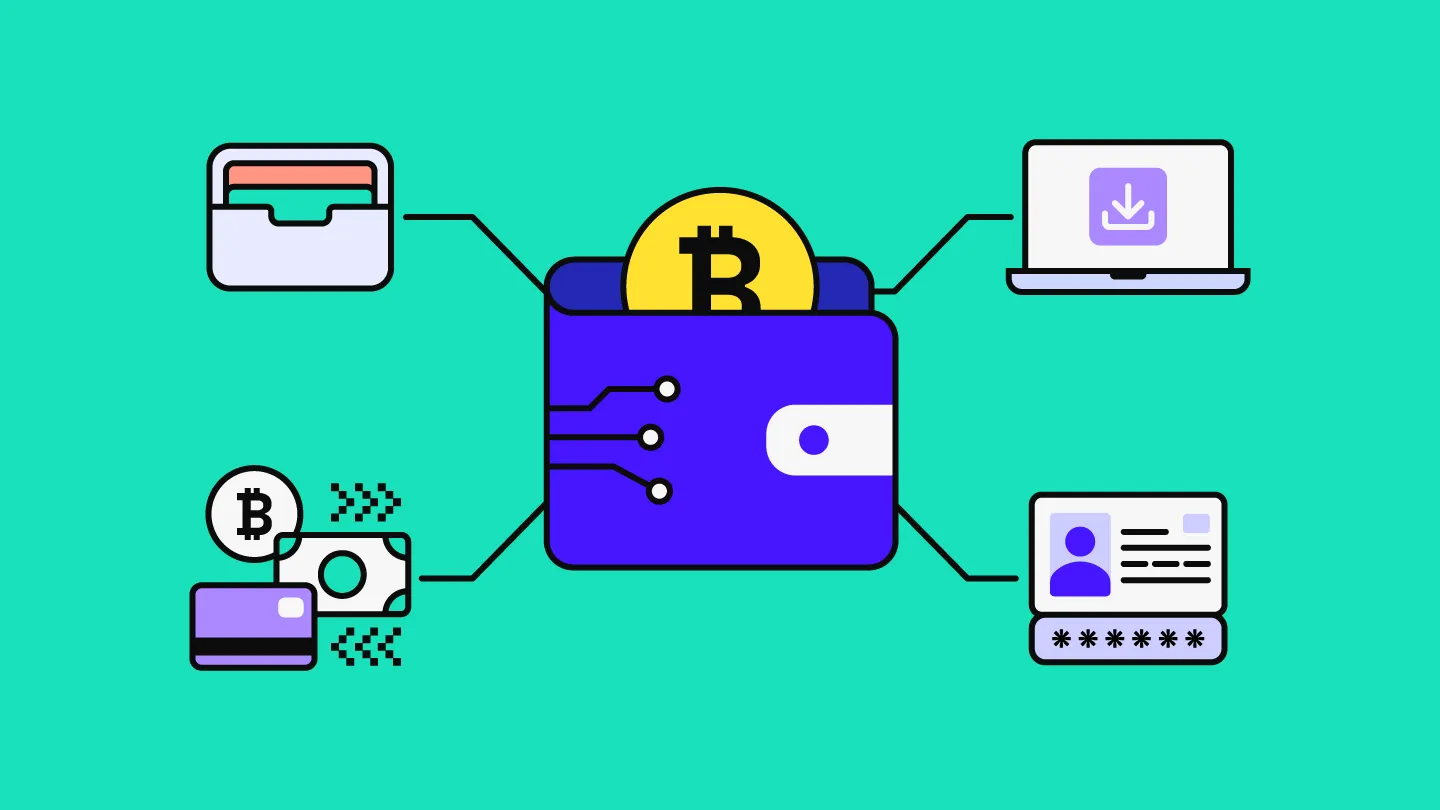
If you've just bought your first Bitcoin or Ethereum and someone told you to "move it to a wallet," you might be wondering what that even means and why it matters. The answer is more important than most people realise. Understanding crypto wallets is not optional knowledge. It's the difference between truly owning your crypto and just renting access to it from someone else.
The basics What a crypto wallet actually is:
A Crypto Wallet Doesn't Store Crypto - Here's What It Actually Does
The first thing that trips up beginners: a crypto wallet does not store your cryptocurrency. Your crypto always lives on the blockchain a public, decentralised ledger that records every transaction. What a wallet actually stores is your private key a unique, secret code that proves you own the crypto associated with a particular address and gives you the authority to send it.
Think of it this way: your crypto wallet is less like a physical wallet and more like a keychain. The blockchain is a giant public safety deposit vault. Your private key is the only key that opens your specific box. Whoever holds the private key controls the crypto full stop.
This is why the phrase "not your keys, not your coins" matters so much in crypto. If your crypto sits on an exchange like Coinbase or Binance, you don't actually hold your private keys the exchange does. You have an IOU, not direct ownership. If that exchange is hacked, goes bankrupt, or freezes withdrawals, your access to your funds could disappear overnight.
Key terms Vocabulary every beginner needs:
- Private Key - A secret code that proves ownership and authorises transactions. Never share this with anyone ever.
- Public Key / Address - Your wallet's public identifier like a bank account number. Safe to share so others can send you crypto.
- Seed Phrase - A 12 or 24-word backup phrase that can restore your wallet if you lose access. Guard it like your life savings.
- Custodial Wallet - A wallet where a third party (like an exchange) holds your private keys on your behalf.
- Non-Custodial Wallet - A wallet where only you hold your private keys. Full ownership, full responsibility.
- Cold Storage - Keeping private keys completely offline the most secure way to store large amounts of crypto long-term.
The types Which wallet is which:
The Main Types of Crypto Wallets Explained
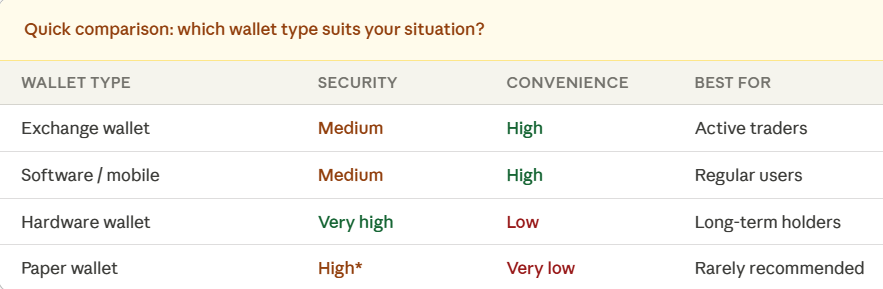
There are several types of crypto wallets, each with different trade-offs between convenience and security. Here's what each one is and who it's best suited for:The Main Types of Crypto Wallets Explained
There are several types of crypto wallets, each with different trade-offs between convenience and security. Here's what each one is and who it's best suited for:
🌐 Custodial
Exchange Wallet
Built into platforms like Coinbase, Binance, or Kraken. Easy to use but you don't control the private keys. Best for active trading not for long-term holding.
Easiest to use
📱 Hot Wallet
Software / Mobile Wallet
Apps like MetaMask, Trust Wallet, or Exodus. Non-custodial you hold your keys. Connected to the internet, which adds some risk but offers daily convenience.
Good for daily use
🔒 Cold Wallet
Hardware Wallet
Physical devices like Ledger or Trezor that store your private keys completely offline. The gold standard for security. Best for holding significant amounts long-term.
Most secure
📄 Cold Wallet
Paper Wallet
A printed document containing your public and private keys. Completely offline but fragile if it burns, floods, or fades, your crypto is gone forever.
Rarely recommended
The seed phrase Your most critical responsibility:
Your Seed Phrase: The Most Important Thing in Crypto Security
When you set up a non-custodial wallet, you'll be shown a seed phrase a randomly generated sequence of 12 or 24 words. This phrase is the master backup for your entire wallet. If your phone is stolen, your laptop crashes, or you simply forget your password, your seed phrase is the only way to recover access to your funds.
⚠️ Critical warning: If you lose your seed phrase and lose access to your wallet, your crypto is gone permanently. There is no customer service, no password reset, no bank to call. Nobody can recover it for you. This is the responsibility that comes with true ownership in crypto and it's non-negotiable.
Best practices for storing your seed phrase safely:
- Write it on paper never type it into a phone, computer, or screenshot it
- Store the paper in a fireproof, waterproof location or make two physical copies kept in separate secure locations
- Never share it with anyone, enter it on any website, or give it to anyone claiming to be "support staff" legitimate wallets will never ask for it
- Consider engraving it on a metal plate for durability if storing significant funds long-term
The most common crypto scam: Someone contacts you claiming to be wallet support and asks for your seed phrase to "verify your account" or "fix a problem." There is no legitimate reason anyone should ever ask for your seed phrase. If someone asks for it, it is a scam every single time.
Which wallet The right choice for your situation:
Which Crypto Wallet Should a Beginner Start With?
The right wallet depends on what you're trying to do with your crypto and how much you're holding.
If you're just starting out and learning: An exchange wallet on a reputable platform like Coinbase is fine for small amounts while you get comfortable. The trade-off is that you don't hold your own keys, but the convenience reduces the risk of user error while you're still learning.
If you're holding crypto for more than a few weeks: Move to a non-custodial software wallet like MetaMask or Trust Wallet. Free to set up, you control your keys, and it works across most blockchains and decentralised apps.
If you're holding a significant amount anything you'd be devastated to lose: Invest in a hardware wallet. A Ledger Nano or Trezor costs €60–€150 and provides a level of protection that no software solution can match. For serious long-term crypto holders, this is not optional it is the standard.
Crypto wallet safety - beginner checklist
- Understand the difference between custodial and non-custodial wallets before choosing
- Write down your seed phrase on paper and store it securely never digitally
- Never share your private key or seed phrase with anyone, for any reason
- Only download wallet apps from official sources fake wallet apps are a common scam
- For long-term holdings, move crypto off exchanges and into a hardware wallet
- Test a small withdrawal before moving large amounts to a new wallet
- Never enter your seed phrase on any website wallets never require this to function
The Bottom Line
A crypto wallet is not a nice-to-have. It is the fundamental tool of crypto ownership and understanding how it works is the first real step toward taking control of your digital assets. The difference between leaving your crypto on an exchange and holding it yourself is the difference between having a claim on crypto and actually owning it.
Start simple, stay secure, and protect your seed phrase as if it were cash in your hands because in the world of crypto, that's exactly what it is.