Why You Keep Blowing Your Budget at 2 AM (And How to Stop)
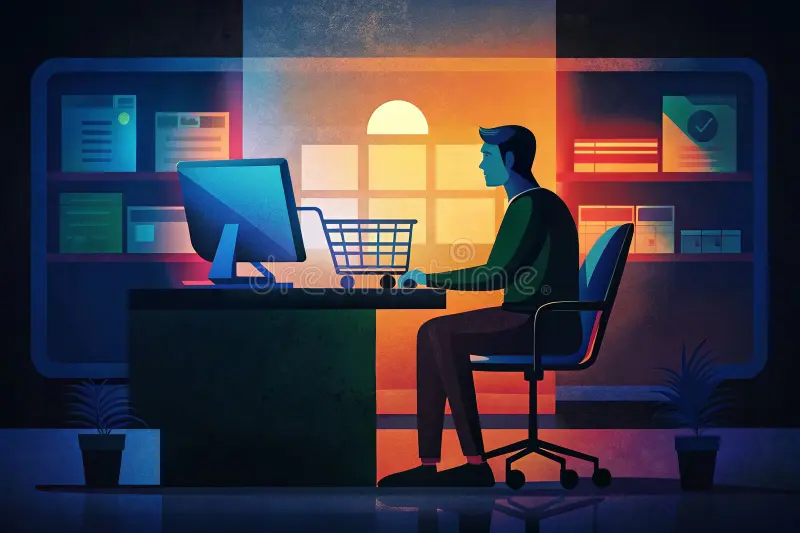
You made a budget. You followed it mostly. Then 2 AM happened: a few social media scrolls, a sale notification, a "why not" moment, and suddenly you're checking out a cart full of things you definitely didn't plan to buy. Sound familiar? You're not alone, and you're not weak. Late-night impulse spending is one of the most common and least discussed ways people quietly destroy their financial progress and it has a very specific explanation.
The science What's actually happening in your brain at night
Why Late-Night Spending Feels So Different - and So Easy
The problem isn't that you lack discipline. The problem is that your brain at midnight is a genuinely different decision-making machine than your brain at noon and the entire e-commerce industry knows it.
The psychology behind it:
Research in behavioural economics shows that decision fatigue the mental exhaustion that builds after a full day of choices significantly weakens impulse control by evening. Your prefrontal cortex, the part of the brain responsible for rational thinking and long-term planning, is running on fumes. Your emotional brain, which responds to reward, novelty, and instant gratification, is still fully active. The result: late-night you is far more likely to say yes to spending that daytime you would immediately reject.
- 34% of impulse online purchases happen between 10 PM and 2 AM
- €180 average monthly spend on unplanned late-night purchases
- 67% of late-night buyers report feeling regret by morning
- 3x more likely to complete a purchase after midnight vs midday
Add to that the specific conditions of late night you're alone, you're tired, you're lying in bed with a phone and no friction between you and a purchase and the deck is completely stacked against your budget.
The triggers What sets it off
The Six Late-Night Spending Triggers You Need to Recognise
Late-night impulse spending rarely happens randomly. It's almost always triggered by one or more of these specific conditions and recognising your personal triggers is the first step to breaking the pattern.
📱 Endless scrolling - Social media and shopping apps are algorithmically designed to surface products after extended screen time. You're not browsing you're being sold to.
🔔 Sale notifications - "Ends tonight" and "Only 3 left" are engineered scarcity designed to bypass rational thinking. At midnight, your tired brain can't resist urgency.
😔 Emotional lows - Stress, boredom, loneliness, or a bad day all increase dopamine-seeking behaviour. Shopping delivers a fast, easy hit until the morning regret arrives.
🍷 Lowered inhibitions - Alcohol, tiredness, or even just the relaxed mental state of winding down reduces the natural friction that normally stops impulsive purchases.
💳 Saved payment details - One-click checkout removes every natural pause point between impulse and purchase. There's no friction. No moment to reconsider. Just a tap and it's done.
👀 Comparison and FOMO - Seeing what others have on social media, in unboxing videos, in hauls activates social comparison at exactly the moment your defences are lowest.
The app design problem: Retail apps deliberately send push notifications in the evening not because it's convenient for you, but because conversion rates are highest when your willpower is lowest. Your phone is not neutral. It is a store that follows you to bed.
Six Practical Ways to Stop Late-Night Impulse Spending
1) Create Friction Between You and the Purchase
The most powerful anti-impulse tool isn't willpower it's friction. Remove saved payment details from every shopping app and website. When completing a checkout requires getting up to find your card, entering 16 digits, and adding the security code, most late-night impulses evaporate before you finish.
You can also delete shopping apps from your phone entirely and require yourself to use a browser instead. The additional steps create just enough pause for your rational brain to catch up.
Action: Delete saved card details from your three most-used shopping apps tonight
2) Use the 24-Hour Rule - Non-Negotiably
Any unplanned purchase over a set threshold €20, €50, whatever fits your budget goes into a "wishlist" and cannot be bought for 24 hours. No exceptions. This single rule eliminates the majority of impulse purchases because the emotional urgency that felt overwhelming at midnight has almost always faded completely by the following evening.
Studies on delayed purchasing consistently show that 70–80% of items added to wishlists are never purchased once the initial emotional trigger passes. You don't actually want most of what midnight-you decides is essential.
Action: Set your personal 24-hour threshold and write it somewhere visible
3) Turn Off Retail Push Notifications Permanently
Go through every shopping app on your phone right now and disable all push notifications. Every "sale ends tonight" alert is a calculated attempt to trigger a purchase at the moment you're most vulnerable. You are not missing out by not seeing them you are protecting your budget from deliberate psychological manipulation.
While you're there, unsubscribe from retail email lists. The fewer purchase prompts that reach you in the evening, the fewer battles you have to fight against your own tired brain.
Action: Spend 10 minutes disabling all retail app notifications right now
The "already closed" trick: Set a personal rule that your spending is "closed" after 9 PM like a shop shutting for the night. Frame it not as deprivation but as a business decision: the store of your finances closes at 9. Nothing gets bought after hours. This mental reframe works surprisingly well because it removes the internal argument entirely.
4) Create a Guilt-Free "Fun Money" Allowance
Overly restrictive budgets fail because they create a pressure valve effect the tighter the budget, the more powerful the release when willpower cracks. Instead, build a specific monthly allowance for unplanned or want-based spending an amount you can spend on absolutely anything, guilt-free, without justification.
When that pot is empty, it's empty until next month. This approach works because it removes the forbidden-fruit dynamic that makes late-night spending feel so satisfying. You still get to spend on things you enjoy just within a boundary you set deliberately, rather than one you blow through impulsively.
Action: Add a "fun money" line to your budget this week give it a real number
5) Replace the Habit, Don't Just Remove It
Late-night spending fills a need for stimulation, comfort, novelty, or escape. Simply trying to stop without replacing it with something else rarely works long-term. Identify what emotional state triggers your spending and find a substitution: a book, a podcast, a short walk, a journaling habit, even a free game on your phone.
The goal isn't to become a monk. It's to give your late-night self something to do that doesn't involve opening a checkout screen.
Action: Name one late-night activity you genuinely enjoy that costs nothing
6) Do a Morning-After Audit Once a Month
Once a month, review every unplanned purchase from the previous four weeks and ask one question for each: "Would I buy this again today?" This isn't about guilt it's about pattern recognition. Most people quickly spot that their impulse spending clusters around specific times, emotional states, or platforms. Once you see the pattern, you can interrupt it before it starts.
Action: Schedule a 15-minute monthly spending review in your calendar now
Your late-night spending defence plan:
- Remove saved payment details from all shopping apps and websites
- Implement a 24-hour rule for any unplanned purchase above your threshold
- Disable all retail push notifications permanently
- Unsubscribe from retail email lists especially ones that send evening promotions
- Add a guilt-free fun money allowance to your monthly budget
- Set a personal "spending closed" time each evening 9 PM or earlier
- Run a monthly morning-after audit to spot patterns before they repeat
The Bottom Line
Late-night impulse spending isn't a character flaw. It's a predictable outcome of decision fatigue, emotional triggers, and an e-commerce industry that has spent billions of dollars optimising for exactly the moment your defences are lowest. Understanding that is not an excuse it's an advantage. Because once you know the mechanism, you can dismantle it.
Friction, rules, and pattern recognition beat willpower every single time. Your budget doesn't need you to be stronger it needs your environment to be smarter. Set it up tonight, before 2 AM rolls around again.